Target Species
| River | Ocean | Mature Male | Mature Female | Breed | Description | Range |
|---|---|---|---|---|---|---|
 |
Steelhead (Sea going)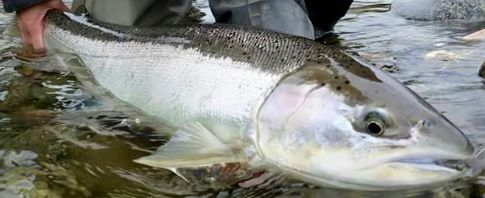 |
 |
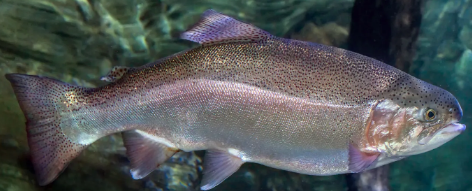 |
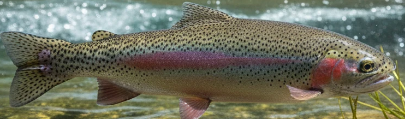
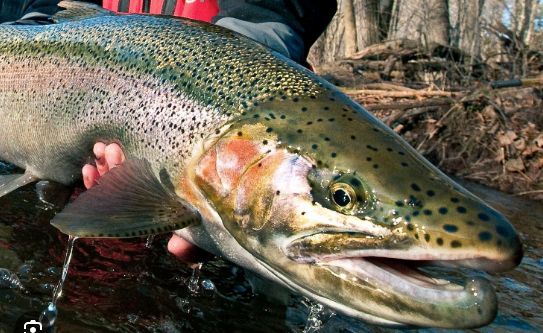
Oncorhynchus mykiss (Rainbow Trout) |
A rainbow trout is typically bluish-green or olive-green on its back, with silvery sides and a white belly | Almost the entire world, minus Africa and Antarctica along with islands in the Pacific |
 |
Does not go to sea | 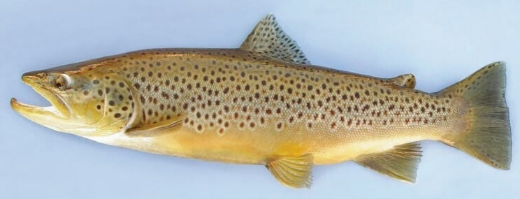 |
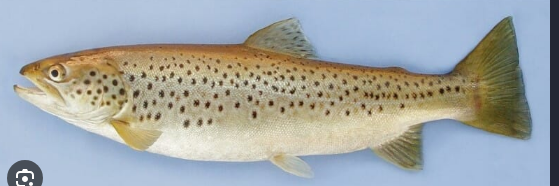 |
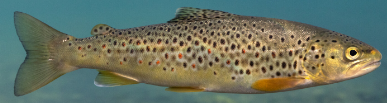
Salmo trutta (Brown Trout) |
A brown trout is typically olive to golden-brown on its back, shading to yellowish sides and a creamy or white belly | Found in both Americas, Europe, West Asia, Australia, New Zeland and parts of Africa |
 |
Does not go to sea | 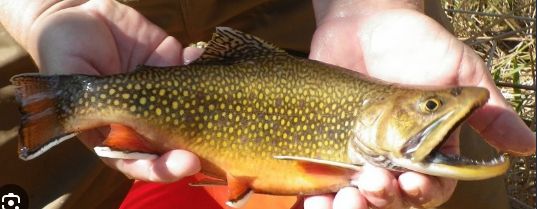 |
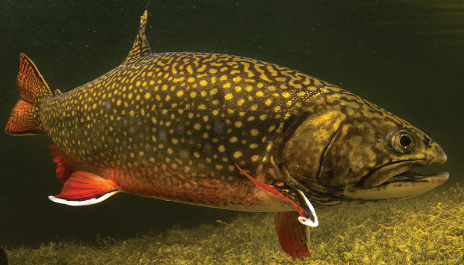 |
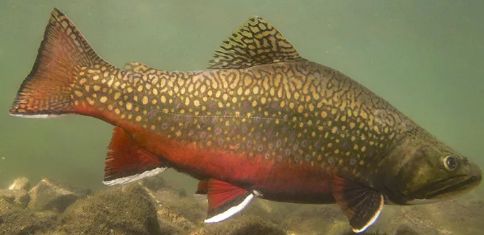
Salvelinus fontinalis (Brook Trout) |
A brook trout has a dark olive-green back with worm-like (vermiculated) patterns, and its sides feature red spots surrounded by blue halos. The belly is pale yellow-orange, but becomes a vibrant reddish-orange during spawning season. Its lower fins are orange-red with a white leading edge, a black stripe, and a white posterior margin. | Found in North America, Parts of South America, All through Europe and Australia, with a feew pockets in the Indian region |
 |
Does not go to sea | 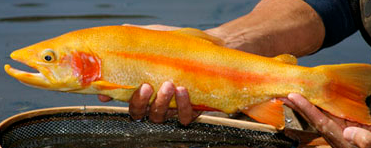 |
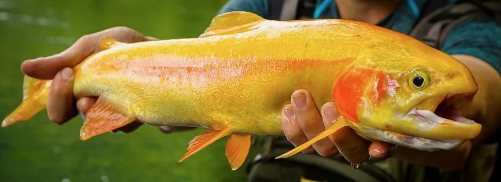 |
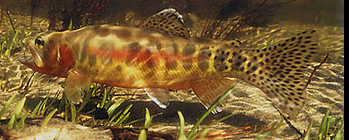
Oncorhynchus aguabonita (California Golden Trout) |
A golden trout has a dark olive-green back, bright golden-yellow sides, and a distinct red-orange stripe along its lateral line. Its belly and cheeks are often a deep red to red-orange, and it has large dark spots on its back, dorsal fin, and tail. It also typically has about ten oval-shaped, vertical "parr marks" along its side that remain even in adulthood | Sierra Nevada Mountains along with just a few streams in high elevation (minimum of 8,000 feet) in Utah, Colorado, Wyoming, Montana, Washington, Idaho, and Alberta Canada |
 |
Does not go to sea | 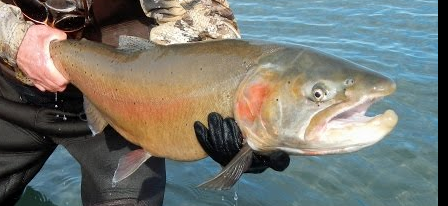 |
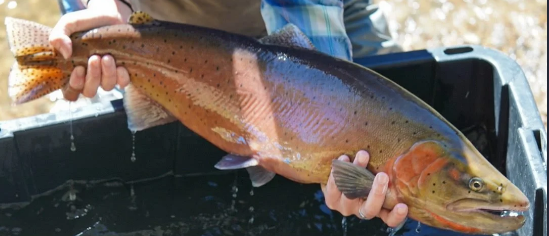 |
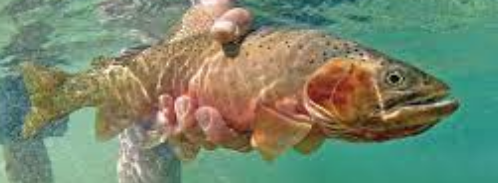
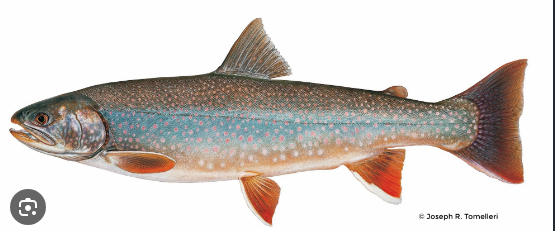
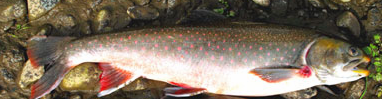
Oncorhynchus henshawi henshawi (Lahontan Cutthroat Trout) |
Lahontan cutthroat trout have a greenish-bronze back, a faint rosy-pink or yellowish-copper lateral band, and a silver belly. They are distinguished by a red or orange slash mark under the jaw and have dark, round spots, which can be numerous on lake forms and concentrated above the lateral line in stream forms | Northern Nevada, Northeastern California, Southeastern Oregon |
 |
Does not go to sea | 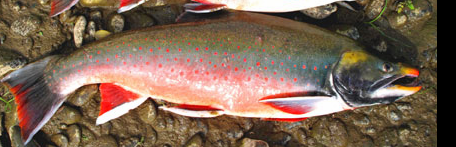 |
 |
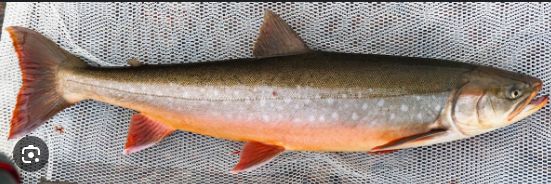
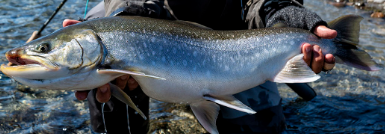
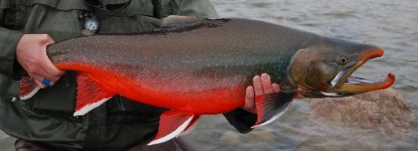
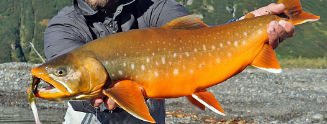
Salvelinus malma (Dolly Varden) |
a greenish-olive to bluish or brownish back with a lighter belly, and numerous pale yellow, orange, or red spots on their sides. Spawning males undergo a dramatic color change, developing bright orange-red spots and a red or reddish-black belly and fins, while females are less intensely colored | “Found in Pacific Arctic and coastal drainages from Washington up through Alaska and across into Arctic Canada and far eastern Russia |
 |
 |
 |
 |
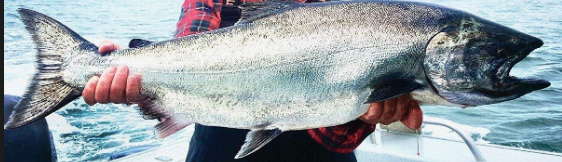
Salvelinus alpinus (Artic Char) |
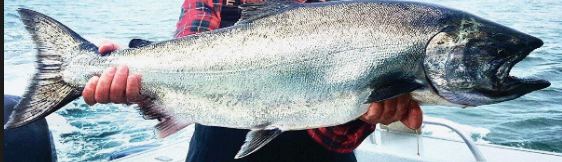
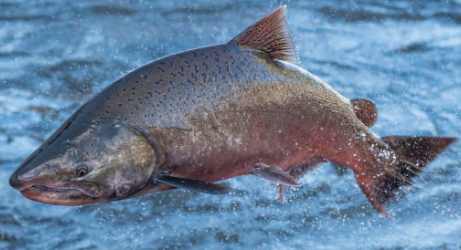
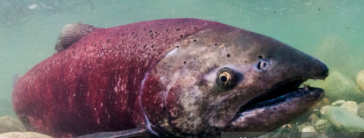
Arctic char typically have a dark back (greenish-brown, blue, or green) and a lighter belly (white, yellow, or red), with silvery sides and light pink or red spots. During the spawning season, their coloration becomes more intense, often turning bright orange or red, with vibrant spots and fins that may have a white leading edge | Native to Arctic and sub-Arctic lakes, rivers and coastal waters across Alaska, northern Canada, Greenland, northern Europe and Siberia (circumpolar) |
 |
 |
 |
 |
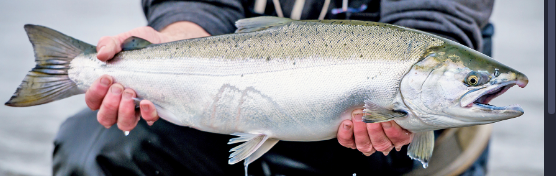
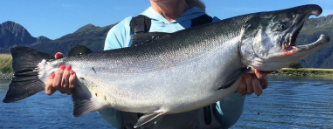
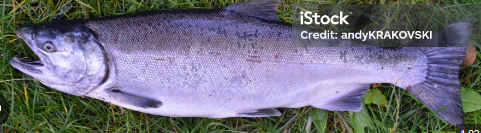
Oncorhynchus tshawytscha (Chinook Salmon) (King Salmon) |
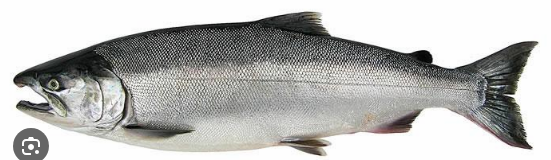
A king salmon's color varies, with its back being blue-gray or blue-green and its sides and belly being silvery. Spawning adults undergo a significant color change to maroon or olive-brown, and males develop reddish bellies and fins | Native to the Pacific coast from California to Alaska and into northeastern Russia; also introduced with established populations in the Great Lakes, Chile, Argentina, and New Zealand |
 |
 |
 |
 |
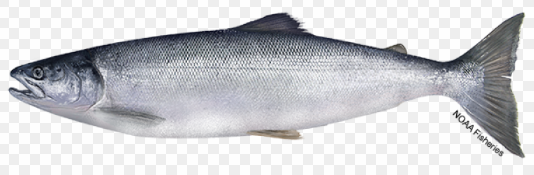
Oncorhynchus kisutch (Coho Salmon) (Silver Salmon) |
A silver salmon's color depends on its life stage. In the ocean, it has a dark metallic blue or greenish back and bright silver sides, with small black spots on the back and upper tail lobe. During the spawning season in freshwater, it turns a deep reddish-maroon with a darker back and develops a hooked snout | Native to Pacific coastal rivers from California to Alaska and northeastern Russia; also introduced in the Great Lakes and Patagonia |
 |
|
 |
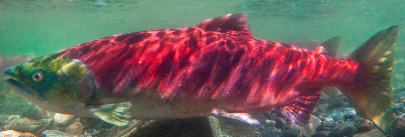 |
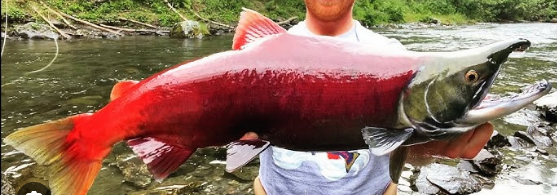
Oncorhynchus nerka (Sockeye Salmon) (Kokanee if land locked) |
Sockeye salmon have a metallic blue-green back and silvery sides when in the ocean, but transform into a vibrant scarlet red with a green head and hooked jaws when they return to freshwater to spawn | Native to the Pacific Rim from northern California through Alaska and across Russia to northern Japan; also widespread inland as land-locked kokanee and introduced in Patagonia |